



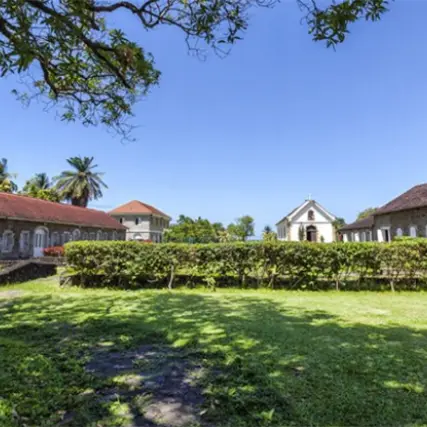
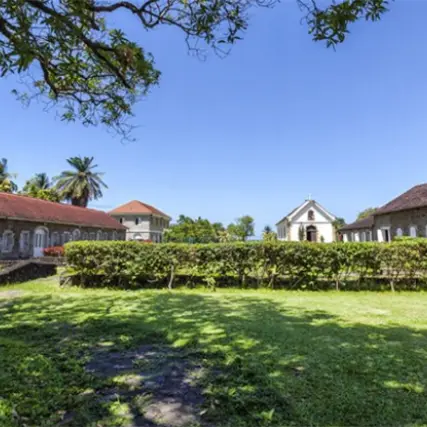
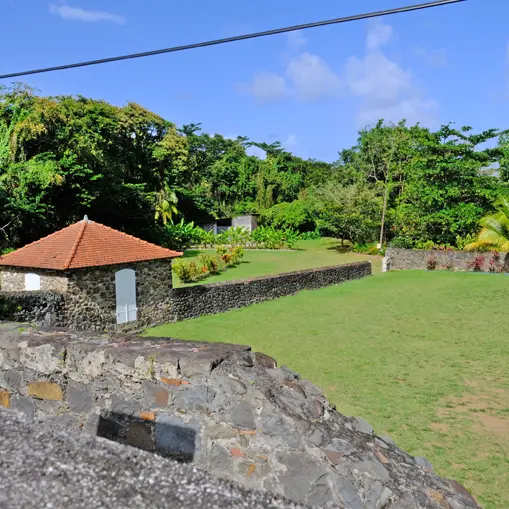
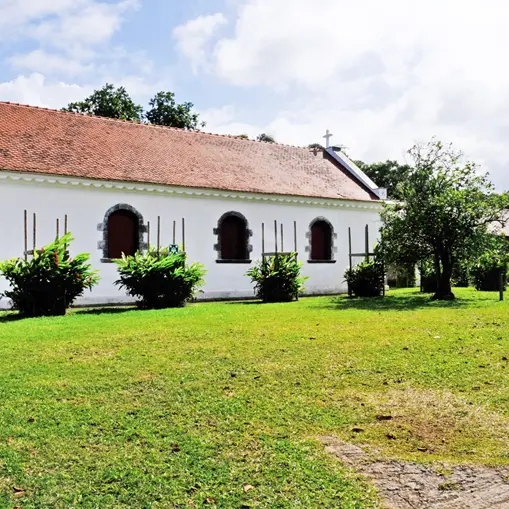
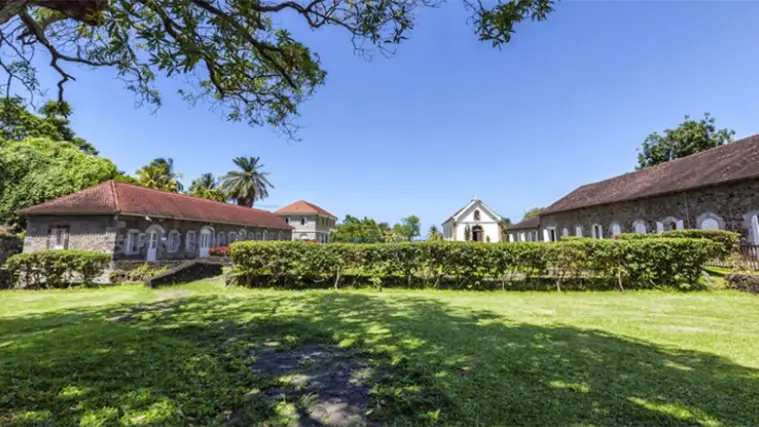
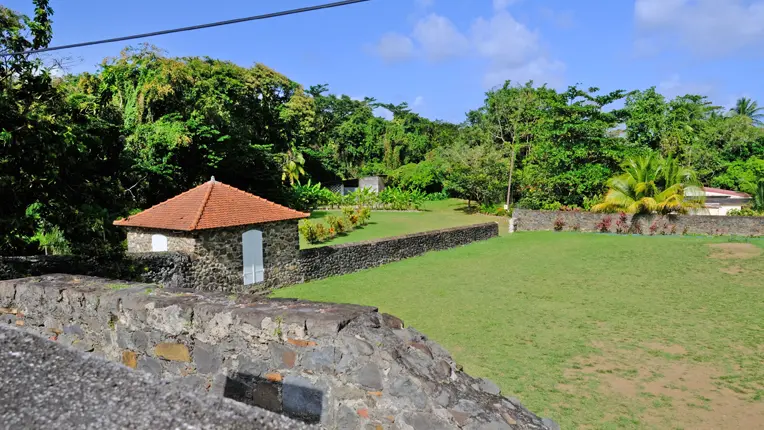
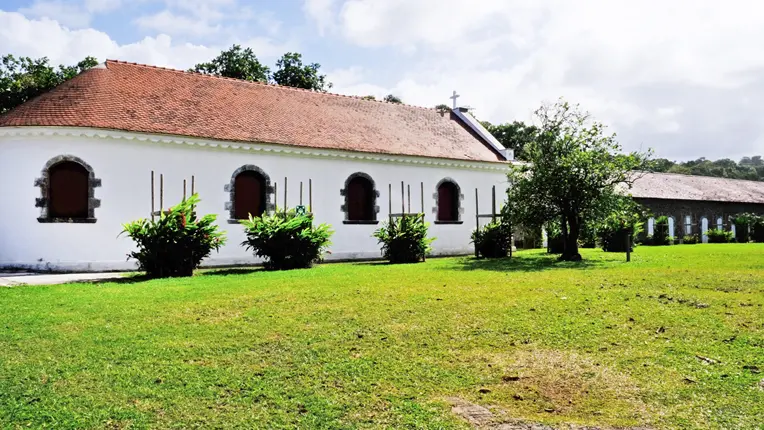
The Domaine de Fonds Saint-Jacques has been listed as a "Historic Monument" since 1980. In this respect, it includes one of the rare Christian slave cemeteries in the Lesser Antilles, whose burials were studied during archaeological excavations in the 1990s.
Fonds Saint-Jacques estate stands on a piece of land granted in 1659 to the "Prescheurs brothers of the Order of Saint-Dominique", by Marie de Saint-André-Bonnard, widow of the first governor, lord owner of the island and nephew of Pierre Belain D'Esnambuc: Jacques Dyel du Parquet.
It was founded on the site of the last battles between French settlers and Kalinagos in the so-called "Cabesterre" or "Domaine des sauvages". The Habitation subsequently experienced a long period of sugar production, which is well documented in the "Nouveau Voyage aux îles de l'Amérique..." by Father Jean-Baptiste Labat in 1722. This Dominican missionary, a multi-faceted slave-owner (architect, technician, man of war, ethnographer, pastor...), was appointed administrator of the Habitation from 1696. He made it both a place of singular enslavement and a place of remarkable innovations in sugar-making techniques.
Please note that the Domaine de Fonds Saint-Jacques is not officially open, but only occasionally.
It was founded on the site of the last battles between French settlers and Kalinagos in the so-called "Cabesterre" or "Domaine des sauvages". The Habitation subsequently experienced a long period of sugar production, which is well documented in the "Nouveau Voyage aux îles de l'Amérique..." by Father Jean-Baptiste Labat in 1722. This Dominican missionary, a multi-faceted slave-owner (architect, technician, man of war, ethnographer, pastor...), was appointed administrator of the Habitation from 1696. He made it both a place of singular enslavement and a place of remarkable innovations in sugar-making techniques.
Please note that the Domaine de Fonds Saint-Jacques is not officially open, but only occasionally.
Payment methods
 Bank card
 Cash
CashOpenings
All year 2026